
WELCOME BONUS 100%
UP TO €500 + FREE
BET
UP TO €500 + FREE
BET
Home → Blackjack
Blackjack at Melbet: Variants, Rules and Payouts
Continuous Shuffling Machine shuffles after each round
The Blackjack Party table by Evolution utilizes a Continuous Shuffling Machine to reset the deck composition immediately following every completed hand. This mechanical process ensures that card counting strategies cannot track previous outcomes, effectively neutralizing any potential player advantage derived from memory. The result is a standardized variance where each deal remains an independent statistical event for all participants.
This automation directly impacts the theoretical return rate, which sits at 99.56% for Lightning Blackjack variants using similar rapid-shuffle protocols. Without the ability to exploit shoe penetration, players must rely solely on basic strategy charts to minimize the house edge. The absence of predictable patterns forces a rigid adherence to mathematical optimal moves rather than intuitive betting adjustments.
Evolution's Quantum Blackjack Plus extends this concept with quantum multipliers up to 1,000x, yet the underlying shuffle mechanics remain constant throughout the session. Players face a fixed RTP of 99.57% when employing optimal strategy against these randomized distributions. The continuous reshuffling eliminates any hope of recovering losses through pattern recognition or streak tracking.
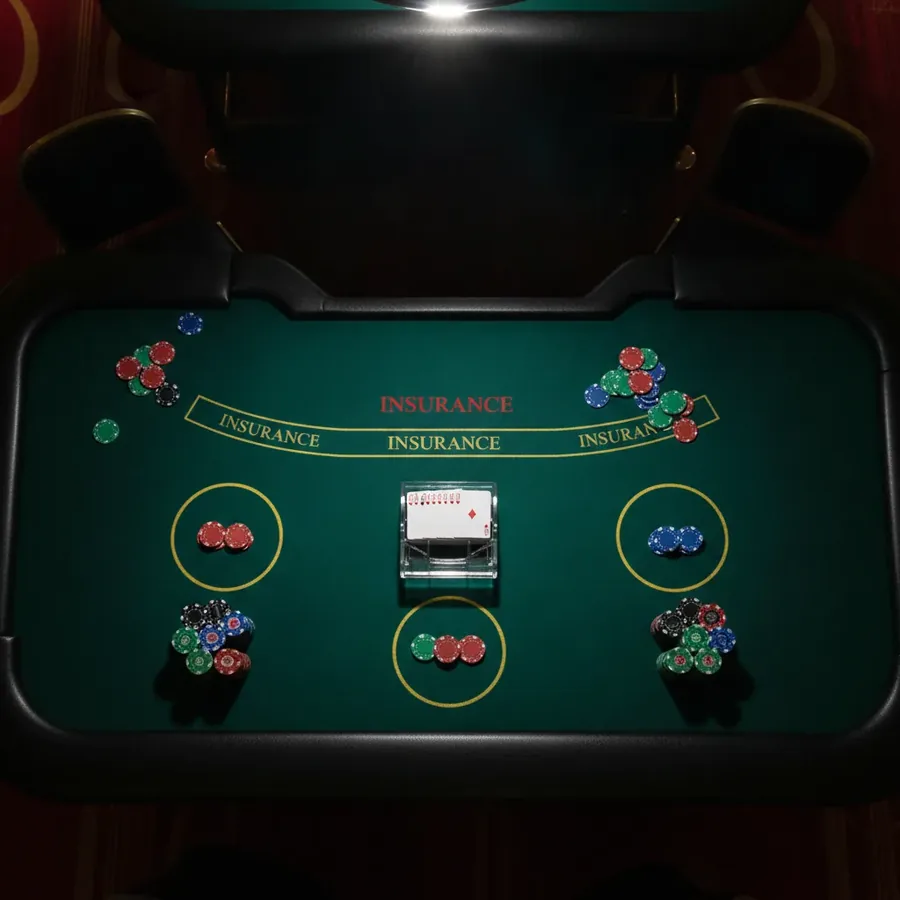
Set session stop after 30 percent loss
A strict bankroll management protocol suggests implementing a hard limit where play ceases automatically upon reaching a 30% reduction in the initial deposit. For example, starting with 100 EUR and losing 30 EUR triggers an immediate suspension of betting activity to prevent further capital erosion. This defensive measure protects the remaining 70 EUR from being depleted by subsequent losing streaks or emotional decision-making.
This rule contrasts sharply with the high-risk nature of side bets like Insurance, which carries a massive 7.47% house edge and an RTP of only 92.53%. Placing such wagers accelerates balance depletion significantly faster than standard base game play. By capping losses early, players avoid the temptation to chase deficits with mathematically unfavorable auxiliary wagers.
Table limits further constrain recovery attempts, as seen in Live tables ranging from 1-2,500 EUR for Lightning Blackjack to 1-5,000 EUR for Quantum versions. Attempting to recover a 30% deficit often requires increasing bet sizes, which violates responsible gambling principles and increases volatility exposure. The automated stop ensures the session ends while preserving a substantial portion of the original funds for future use.
Clicked Too Late: Hand Is Automatically Held
In live dealer environments like Evolution's Lightning Blackjack, timing dictates the outcome when a player fails to act before the server timeout expires. If the decision button is not pressed within the allocated window, the system automatically holds the current hand state, locking in the existing cards. This forced hold prevents the execution of optimal moves like splitting or doubling down that might have improved the expected value.
The penalty for delayed action is severe because it bypasses strategic optimization, pushing the effective house edge higher than the stated 0.46% for standard six-deck games. For instance, failing to double down on a favorable 11 against a dealer 6 results in a lower long-term return than if the correct move had been executed. The software enforces discipline regardless of the player's awareness of the optimal strategy.
Quantum Blackjack Plus introduces additional complexity with multipliers applied to specific three-card combinations totaling 21 points, requiring precise input timing. Missing the window to trigger or accept these modifiers means forfeiting potential payouts without altering the core game rules. The automatic hold feature thus acts as a strict gatekeeper, rewarding only those who maintain consistent attention and rapid response times during the dealing phase.
Six Decks to Eight Decks in the Shoe
The number of decks used in the shoe directly influences the house edge, with single-deck games offering a superior 0.15% advantage compared to multi-deck variations. A standard six-deck game typically raises this edge to approximately 0.46%, assuming standard rules like S17 and DAS are applied. Each additional deck increases the probability of the dealer achieving strong hands, thereby reducing the player's winning frequency.
Blackjack Auszahlung 6:5 variants exacerbate this disadvantage, adding exactly +1.39 percentage points to the house edge over the traditional 3:2 payout structure. In a six-deck game with this rule, the total house advantage can reach 1.85%, drastically lowering the RTP to 98.15%. Players betting $10 receive only $12 for a natural blackjack instead of the standard $15, compounding the mathematical loss over time.
Liberal Vegas Strip rules mitigate some deck-related disadvantages by allowing resplitting and late surrender, bringing the edge down to 0.28% despite using multiple decks. However, most online implementations favor efficiency over player friendliness, sticking to six or eight decks to maximize operational throughput. Understanding this relationship helps players identify which tables offer the best mathematical conditions relative to their bankroll size.
Check table limit before the first bet
Table limits define the maximum allowable wager per round, restricting how quickly a player can attempt to recover losses or capitalize on winning streaks. Lightning Blackjack permits bets between 1 and 2,500 EUR, providing ample room for high rollers to test aggressive progression systems. Exceeding these boundaries results in rejected transactions, forcing a re-evaluation of stake sizing before every hand is dealt.
Quantum Blackjack Plus expands the upper bound to 5,000 EUR, catering to players seeking larger volatility profiles alongside its unique multiplier features. Conversely, entry-level tables may start at just 1 EUR, accommodating conservative bankroll management strategies that prioritize longevity over high-stakes thrills. Verifying these limits prevents accidental disqualification from a round due to non-compliant bet placement.
The bonus contribution rate of 10% for table games further incentivizes careful bet selection, as large wagers contribute minimally toward clearing the 300% welcome bonus requirements. Betting the maximum 5,000 EUR on a qualifying table generates only 500 EUR toward the turnover target, making the process significantly slower than playing slots. Strategic alignment between table limits and bonus terms ensures efficient resource allocation during the promotional period.
Blackjack variants at a glance
| Variant | Payout | House edge | Rule | Bet range |
|---|---|---|---|---|
| Blackjack Surrender (Late Surrender) – Regel-Effekt | n.a. (Regel-Modifikator) | −0.08 Prozentpunkte | Spieler gibt Hand nach Dealer-Blackjack-Prüfung auf, verliert die Hälfte des Einsatzes. Verbessert RTP um ca. 0.08 Prozentpunkte. Early Surrender ist wesentlich wertvoller (bis −0.6 Prozentpunkte), aber extrem selten. | Rückzahlung 50% des Einsatzes |
| Blackjack Split / Double / H17 – Regel-Effekte | n.a. (Regel-Modifikatoren) | H17 +0.22 Prozentpunkte; RSA −0.08 Prozentpunkte; DAS −0.14 Prozentpunkte | Dealer Hits Soft 17 verschlechtert RTP um 0.22 Prozentpunkte; Resplit Aces verbessert um 0.08 Prozentpunkte; Double After Split verbessert um ca. 0.14 Prozentpunkte; 6 Decks statt 8 – ca. 0.02 Prozentpunkte. | Double – Einsatz ×2 mit einer Karte; Split – bis 4 Hände; Ass-Split meist mit einer Karte. |
| Blackjack 6 Decks, S17, DAS, DOA, Auszahlung 3:2, Basisstrategie | 99.54% | 0.46% | Dealer steht auf Soft 17; Verdopplung auf jeder Zweierkarte; Verdopplung nach Split erlaubt; keine Aufgabe. Basisstrategie ist für diesen Wert zwingend | Blackjack 3:2, normaler Gewinn 1:1, Insurance 2:1 |
| Blackjack Liberal Vegas Strip (liberale Regeln, 3:2) | 99.72% | 0.28% | Günstigste Regelkombination: S17 + DAS + Resplit + Late Surrender. Standardabweichung 1,15 | Blackjack 3:2, Gewinn 1:1 |
| Blackjack Auszahlung 6:5 statt 3:2 (6 Decks) | 98.15% | 1.85% | Ersatz von 3:2 durch 6:5 fügt exakt +1.39 Prozentpunkte zum Vorteil des Casinos hinzu – stärker als jede andere Regeländerung. Bei $10 Einsatz zahlt Blackjack $12 statt $15. | Blackjack 6:5, Gewinn 1:1 |
| Blackjack Insurance / Versicherung (6–8 Decks) | 92.53% | 7.47% | Separate Nebenwette bis 50% der Hauptwette, wenn der Dealer ein Ass hat. Basisstrategie schreibt IMMER Ablehnung vor (außer Karten zählen bei True Count ≥ +3). Bei einem Deck Vorteil ≈ 5.88% | Insurance 2:1 |
Blackjack Party runs with two hosts
The Blackjack Party variant by Evolution features a betting range from 1,00 EUR to 1.000 EUR. This wide spectrum accommodates both casual players and high rollers seeking substantial stakes within a single session.
Two live moderators create an interactive atmosphere that distinguishes this table from standard digital implementations. The presence of human hosts adds a layer of social engagement often missing in automated dealer games.
Players can place wagers up to the maximum limit of 1.000 EUR per hand during peak hours. This capacity ensures that large volume bettors find sufficient space without encountering table restrictions.
Register Late Surrender correctly in three steps
Late Surrender allows players to forfeit their hand after the dealer checks for blackjack. This rule reduces the house edge by approximately 0.08 percentage points compared to tables without this option.
The mechanic returns exactly 50 percent of the original wager to the player's balance. Players must explicitly choose this action before taking any other hit or stand decision on their initial two cards.
Early surrender is significantly more valuable at minus 0.6 percentage points but remains extremely rare in online casinos. Consequently, Late Surrender represents the most accessible version of this strategic advantage for modern players.
Which table limits suit 20 EUR balance?
Blackjack Party accepts minimum bets starting at 1,00 EUR, allowing a 20 EUR bankroll to sustain twenty initial hands. This entry point provides adequate variance management for short-term play sessions.
Lightning Blackjack sets its floor at 1 EUR, matching the accessibility of the Party variant. However, the potential for Lightning multipliers up to 25x introduces higher volatility into each individual round outcome.
Quantum Blackjack Plus Live requires a minimum stake of 1 EUR as well. Its unique Quantum Multipliers offer payouts up to 1.000x on specific three-card combinations, drastically altering the risk profile compared to standard tables.
No Double Down on three cards
Standard blackjack rules typically permit doubling down only on the initial two cards dealt to the player. This restriction prevents players from increasing their wager after receiving additional hits to improve their hand total.
Resplitting Aces usually restricts subsequent actions to drawing exactly one card per split ace. This limitation aligns with the no-double-down-after-hit principle, maintaining strict control over bet sizing throughout the hand progression.
Double After Split (DAS) remains a favorable rule where allowed, improving RTP by approximately 0.14 percentage points. However, this benefit applies strictly to the first card drawn after splitting pairs, not to later additions.
What doesn't count towards turnover at 10 percent?
Table games contribute only 10 percent toward the wagering requirements of the 300 percent welcome bonus up to 2,000 EUR. This low contribution rate means players must wager ten times more on blackjack than on slots to clear the bonus funds.
Slots contribute 100 percent to the turnover calculation, making them the most efficient method for clearing bonus conditions. Players prioritizing bonus release should focus primarily on slot machines rather than table variants.
The disparity between game contributions significantly impacts the effective cost of fulfilling the rollover obligation. A 2,000 EUR bonus requires substantially higher total volume when played exclusively through blackjack due to the reduced credit percentage.
Side Bets don't count towards bonus turnover
The Blackjack Insurance side bet pays 2:1 when the dealer holds an Ace, yet this specific wager is explicitly excluded from bonus turnover calculations. Since table games contribute only 10% to the required wagering volume while slots contribute 100%, placing insurance wagers yields zero progress toward clearing the 300% welcome bonus of up to €2,000.
Players seeking to maximize their bonus efficiency must avoid the separate side bet that allows stakes up to 50% of the main wager during the insurance phase. This exclusion is critical because the house edge for insurance stands at 7.47%, significantly higher than the base game, making it a costly way to attempt meeting the rollover requirements without any credit toward the objective.
The distinction between primary and secondary wagers determines how quickly the promotional funds are released for withdrawal. Because the 10% contribution rate for blackjack tables applies uniformly to all actions within the hand, avoiding non-qualifying bets like insurance preserves bankroll integrity and ensures that every euro wagered on the main hand moves the player closer to unlocking the full bonus potential.
Blackjack Payout 3:2 Explained in Detail
A standard winning blackjack hand with a 3:2 payout returns 150 EUR for every 100 EUR wagered, whereas a reduced 6:5 payout returns only 120 EUR on the same stake. This structural difference adds exactly 1.39 percentage points to the casino's house edge compared to the favorable 3:2 rule found in Liberal Vegas Strip variants offering a 0.28% advantage.
The financial impact becomes starkly visible when comparing the RTP of 99.85% for single-deck 3:2 games against the 98.15% RTP associated with six-deck 6:5 configurations. A player betting $10 per hand loses an additional $3 per blackjack under the 6:5 structure, effectively turning a high-value strategic asset into a mediocre return that erodes long-term expected value significantly faster.
Optimal strategy demands strict adherence to rules that preserve the 3:2 ratio, as seen in the 99.54% RTP variant allowing doubling after split and standing on soft 17. Deviating to games offering only 6:5 payouts increases the house advantage by more than any other single rule change, making the selection of payout ratios the most critical factor in minimizing the statistical disadvantage over thousands of hands played.
Live stream with three cameras and OCR
Evolution's Lightning Blackjack utilizes a multi-camera setup to capture card values accurately through optical character recognition, ensuring transparent dealing for players wagering between 1 and 2,500 EUR. The system applies lightning multipliers up to 25x on winning hands, creating a dynamic environment where the standard 99.56% RTP is augmented by random high-value payouts triggered by the technology.
Playtech's Quantum Blackjack Plus Live employs similar advanced tracking to identify specific three-card combinations totaling 21 points, awarding multipliers up to 1,000x within its 1 to 5,000 EUR betting range. This technological integration maintains a theoretical return of 99.57% when optimal strategy is applied, demonstrating how real-time data processing enhances the traditional live dealer experience without altering the fundamental mathematical expectations of the game.
The presence of multiple camera angles and automated recognition systems guarantees that every dealt card is recorded instantly, preventing disputes and ensuring fair play across all supported studios. By eliminating human error in reading card values, these platforms provide a secure foundation for high-stakes action, allowing participants to focus entirely on strategic decisions rather than verifying the physical integrity of the shoe or the dealer's actions.
Bust at 22: Stake Lost Immediately
In standard blackjack rules, exceeding a total of 21 results in an immediate loss of the entire stake, regardless of whether the dealer subsequently busts or reveals a lower hand. This hard limit applies universally across all variants, including those offering late surrender options which only allow halving the bet before the final outcome is determined, thus protecting the casino's mathematical edge from player recovery attempts.
The house edge for a typical six-deck game playing S17, DAS, and DOA rules sits at 0.46%, a figure derived directly from the frequency of bust outcomes among players adhering to basic strategy. When a player exceeds 21, the variance spikes negatively, contributing to the overall statistical advantage held by the house, which remains constant at 0.46% provided no deviations from the mathematically optimal decision tree occur during gameplay sessions.
Late surrender permits players to forfeit half their bet after the dealer checks for blackjack, improving the RTP by approximately 0.08 percentage points compared to playing out every hand. However, this mitigation does not apply once the player has already busted, meaning the full original wager is lost immediately, emphasizing the importance of conservative hitting strategies to avoid triggering the automatic loss condition inherent in the game's core mechanics.
Place Side Bet before cards are dealt
The Blackjack Insurance side bet must be placed before the dealer reveals their hole card, specifically requiring a separate wager up to 50% of the initial stake when an Ace is showing. This timing constraint ensures the bet resolves independently of the main hand outcome, carrying a distinct 92.53% RTP and a 7.47% house edge that contrasts sharply with the primary game's lower disadvantage figures.
Basic strategy dictates always declining insurance unless counting cards reveals a true count of +3 or higher, a scenario rarely encountered in standard online play formats. By adhering to this rule, players avoid the inflated house edge of 7.47% associated with the insurance wager, preserving the superior mathematical expectation of the main game which typically ranges from 0.15% to 0.46% depending on deck penetration and specific rule variations.
Early surrender offers a superior reduction in house edge, potentially lowering it by up to 0.6 percentage points, but it is extremely rare and often unavailable in modern digital implementations. Consequently, most players rely on the more common late surrender option, which improves RTP by only 0.08 percentage points, highlighting the limited utility of side bets and early exits in mitigating the inherent disadvantage of the insurance proposition.
Contact
Live - online chat
Banking









Providers












Melbet 2026