
WELCOME BONUS 100%
UP TO €500 + FREE
BET
UP TO €500 + FREE
BET
Home → Games
Casino games at Melbet
Video Poker: check payout table before betting
Video Poker Jacks or Better 9/6 offers a Return to Player of 99.54% when the optimal strategy is applied correctly. This specific Full Pay version pays 9 coins for a Full House and 6 for a Flush per coin bet, creating a house edge of only 0.46%. Players must wager the maximum of 5 coins to unlock the Royal Flush bonus of 4000 coins.
In contrast, the Video Poker Jacks or Better 8/5 variant drops the RTP to 97.29% with a significantly higher house edge of 2.71%. The reduction from 9/6 to 8/5 payments costs approximately 2.25 percentage points in theoretical return over the long term. This difference highlights how minor table adjustments drastically alter the mathematical expectation for the player.
For players seeking a positive expected value, Video Poker Deuces Wild Full Pay provides an RTP of 100.76% at a negative house edge of -0.76%. All four deuces act as wild cards, allowing five-of-a-kind combinations that standard games cannot produce. However, any deviation from the perfect strategy immediately pushes the RTP below the 100% threshold.
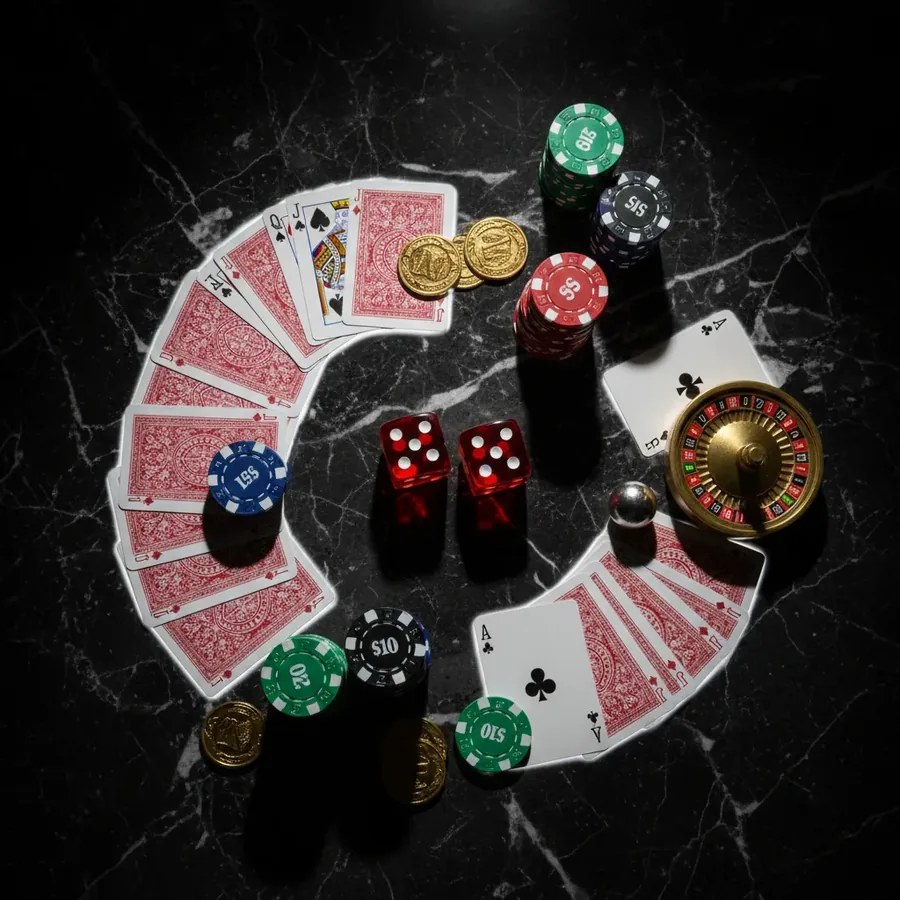
Straight 35:1 Against the Chance of 1 in 37
American Roulette features 38 sectors including both 0 and 00 double zeros, resulting in a straight bet payout of 35:1. This structure generates a house edge of 5.26% and an RTP of 94.74%, which is the lowest among the analyzed table games. The additional zero sector effectively doubles the disadvantage compared to single-zero variants.
French Roulette utilizes a single zero wheel with 37 sectors and applies the La Partage rule to even-money bets like Red or Black. This rule refunds 50% of the stake if the ball lands on zero, reducing the house edge to 1.35% and raising the RTP to 98.65%. Inner bets such as Straight 35:1 do not benefit from this refund mechanism.
The probability of hitting a single number in French Roulette is 1 in 37, while the American version offers only 1 in 38 chances. Despite the identical 35:1 payout for a straight win, the extra losing sector in the American game significantly increases the casino's advantage. Players should avoid the American variant if they aim to minimize the statistical house edge.
Roulette payouts remain fixed at 35:1 for a straight bet regardless of the wheel type, but the underlying odds change the long-term cost. Split bets pay 17:1, Street bets pay 11:1, and Corner bets pay 8:1 across both versions. The variance remains high due to these steep payout ratios against low winning probabilities.
Variance at the Table: 1:1 vs. 35:1
Blackjack Liberal Vegas Strip exhibits a low standard deviation of 1.15 due to frequent small wins and favorable rules like S17 and DAS. The game pays 3:2 for a natural blackjack and 1:1 for regular wins, keeping volatility manageable for steady bankroll management. This combination results in a minimal house edge of 0.28% against a high RTP of 99.72%.
Roulette presents extreme variance because of its high payout structure, where a straight bet pays 35:1 despite low winning odds. The standard deviation is substantially higher than in card games, reflecting the risk of rapid bankroll depletion during dry streaks. Even money bets like Red or Black offer safer play but still carry a 5.26% house edge in the American version.
Craps Pass Line bets provide a moderate standard deviation of 1.00 with a house edge of 1.41% and an RTP of 98.59%. These bets pay 1:1 and allow players to take free odds, which carry a 0.00% house edge when added to the base wager. The combined RTP reaches 99.63% with 3-4-5x odds, offering better stability than pure slot-style table games.
Baccarat Banker bets feature the lowest standard deviation of 0.93 among all analyzed wagers, making it highly stable for conservative players. The banker wins slightly more often but incurs a 5% commission, resulting in an effective payout of 0.95:1 and a 1.06% house edge. This consistency makes it preferable for those avoiding the high swings of roulette or video poker.
37 vs. 38 Sectors: What the Double Zero Costs
The presence of the double zero in American Roulette increases the total sectors from 37 to 38, directly impacting the house advantage. This extra pocket raises the house edge to 5.26% compared to the 1.35% found in European or French single-zero wheels. The RTP consequently drops to 94.74%, making it one of the least profitable options for players.
French Roulette retains the single zero layout with 37 sectors but enhances player protection through the La Partage rule. When the ball lands on zero, half of the even-money stakes are returned, effectively halving the house edge to 1.35%. This rule applies exclusively to outside bets, leaving inner wagers like Corners at the full wheel disadvantage.
American Roulette lacks any special refund mechanisms for the double zero, meaning all losses on the green pockets are kept by the casino. A straight bet on a single number pays 35:1, but the probability of winning is reduced to 2.63% compared to 2.70% in single-zero games. This structural difference accumulates significant losses over thousands of spins.
The cost of the double zero is quantifiable in every betting cycle, costing players roughly four times more in expected loss than single-zero variants. While payouts like Split 17:1 and Dozen 2:1 remain identical across wheel types, the winning frequency is strictly lower. Players seeking higher returns should consistently choose tables with fewer than 38 sectors.
Minimum deposit 20 EUR, table games count 10 percent
Melbet requires a minimum deposit of 20 EUR to activate the 300% welcome bonus capped at 2,000 euros plus 100 free spins. This initial funding step is mandatory before any bonus funds can be credited to the player account. The bonus amount scales with the deposit, so a 20 EUR deposit yields a 60 EUR bonus.
Table games contribute only 10 percent toward the wagering requirement, significantly slowing down the clearance process compared to slots. Slots contribute 100 percent, allowing players to meet turnover conditions much faster using electronic games. Playing Blackjack or Roulette with bonus funds therefore extends the time needed to withdraw winnings.
A 20 EUR deposit creates a 60 EUR bonus balance, requiring 2,400 EUR in total turnover if played entirely on slots (60 x 40). If the same amount is wagered on table games, the effective contribution is reduced, potentially requiring up to 24,000 EUR in bets to clear the same requirement. This disparity heavily favors slot gameplay for bonus conversion.
The 10 percent contribution rate applies to all analyzed table games including Blackjack, Baccarat, and Roulette. Since these games already offer low house edges, combining them with restrictive bonus terms further reduces their overall value. Players intending to use the bonus should prioritize high-contribution categories to avoid excessive playthrough obligations.
Game categories at a glance
| Category | Examples | Stakes From | Highlight |
|---|---|---|---|
| Slots | Gates of Olympus, Thunderstruck II, Money Train 2 | 0,10 EUR | thousands of titles |
| Table games | Roulette, Blackjack, Baccarat | 0,50 EUR | classic rules |
| Live casino | Casino Hold'em, Quantum Roulette Live | 0,20 EUR | real dealers |
| Jackpot games | Mega Moolah, Divine Fortune, Age of the Gods | 0,20 EUR | progressive pools |
| Instant games | Aviator, Plinko, Mines | 0,10 EUR | fast rounds |
| Video poker | Jacks or Better, Deuces Wild | 0,25 EUR | strategy based |
37 vs. 38 Sectors: One Zero Difference
The American Roulette variant features 38 sectors comprising numbers one through thirty-six alongside a single zero and a double zero, which fundamentally alters the mathematical expectation compared to European layouts. This additional sector effectively doubles the house edge to 5.26%, resulting in an RTP of 94.74% for straight bets that pay 35 to 1, significantly reducing long-term retention value for the player base.
European or French wheels contain only 37 sectors with a single zero, creating a distinct advantage for players seeking better odds on even-money bets like red or black which pay 1 to 1. The absence of the double zero lowers the theoretical house advantage substantially, allowing skilled participants to preserve their bankroll longer across thousands of spins when utilizing optimal betting strategies on these specific wheel configurations.
The payout structure remains identical across both wheel types for inside bets such as splits paying 17 to 1 and corners paying 8 to 1, yet the probability of winning differs due to the extra green pocket. Players must adjust their expected return calculations accordingly, recognizing that the American version demands a higher initial stake to achieve the same net result over extended playing sessions compared to the European alternative.
En Prison on Zero Gives Second Chance
The En Prison rule applies exclusively to even-money outside bets in French Roulette, offering a unique safety mechanism when the ball lands on the single zero during a spinning session at the table. Instead of immediately forfeiting the entire original wager upon this specific outcome, the casino holds half the stake for the next round, effectively granting the participant a second chance to recover their funds completely.
This regulation reduces the house edge on affected wagers to 1.35%, matching the benefit provided by the La Partage rule which refunds fifty percent of the bet instantly upon hitting zero. Both mechanisms significantly improve the RTP for these specific bets compared to standard versions where the full amount is lost, making them essential considerations for analytical players tracking long-term variance.
Innner bets including straights paying 35 to 1 and streets paying 11 to 1 do not qualify for this imprisonment benefit, meaning losses on these high-risk positions remain absolute regardless of the zero landing. Consequently, strategic allocation towards protected outside bets becomes mathematically superior for minimizing downside risk while maintaining exposure to potential payouts from successful number predictions on subsequent spins.
Columns and Dozens Pay 2:1 in Roulette
Roulette tables offer two primary categories of outside bets covering twelve numbers each: the columns running vertically down the layout and the dozens spanning horizontally across the first three rows of digits. Both bet types provide a payout ratio of 2 to 1, reflecting the statistical probability of hitting one of the twelve selected numbers out of the total thirty-seven or thirty-eight possible outcomes on the wheel.
These structured wagers allow players to cover a third of the board with relatively low risk compared to straight-up bets, balancing frequency of wins against payout size in a predictable mathematical framework. Understanding the exact coverage area helps analysts calculate expected value accurately, ensuring that the 2 to 1 return aligns with the underlying probabilities inherent in the game's design and mechanics.
The combination of multiple column or dozen bets can cover twenty-four numbers, leaving thirteen or fourteen pockets uncovered depending on the specific wheel type used during the session. This partial coverage strategy offers a middle ground between high-frequency low-payout bets and rare high-payout singles, requiring precise calculation of bankroll management to sustain play through inevitable losing streaks associated with any gambling system.
Read Statistics of Last 500 Rounds Correctly
Tracking the results of the last five hundred rounds provides a sample size large enough to observe minor deviations from theoretical expectations without falling prey to short-term gambler's fallacy misconceptions. Analysts utilize this data volume to verify that the actual return-to-player percentage remains within acceptable statistical bounds, confirming that the random number generator operates correctly according to published specifications over time.
Comparing observed frequencies against expected values for specific bets like the Banker in Baccarat or Red in Roulette reveals whether the house edge of 1.06% or 2.70% is functioning as designed. Significant discrepancies might indicate mechanical issues or software anomalies, prompting further investigation into the integrity of the gaming platform before trusting the displayed statistics for future betting decisions based on historical trends.
Short-term clusters of wins or losses do not alter the fundamental probability of future events, as each spin remains an independent trial governed by fixed mathematical constants established by the game rules. Players should interpret statistical reports as verification tools rather than predictive indicators, recognizing that past performance has no causal influence on upcoming outcomes despite the human tendency to seek patterns in random noise.
Double Down: Doubling Your Bet After Two Cards
The Double Down option in Blackjack allows players to increase their initial wager by exactly double after receiving their first two cards, committing to stand on the resulting hand without drawing additional cards. This strategic move capitalizes on favorable dealer up-cards and strong player hands, potentially maximizing profits during advantageous situations while adhering to strict table rules that limit eligibility based on specific card combinations.
Applying optimal strategy suggests doubling down when holding a hard nine against a dealer four, five, or six, or a hard ten against any card from two through nine, except when the dealer shows an ace. These scenarios present the highest positive expected value, leveraging the dealer's increased likelihood of busting to secure a larger payout than the standard 1 to 1 win on the original stake.
Restrictions often prohibit doubling after splitting pairs or require doubling only on certain total values, impacting the overall return to player rate which stands at 99.72% for liberal Vegas Strip rules. Understanding these limitations ensures players make mathematically sound decisions, avoiding unnecessary errors that could erode the slight edge gained through disciplined application of basic strategy charts during live gameplay sessions.
Multihand Blackjack with Up to 5 Hands
Blackjack Liberal Vegas Strip offers the most favorable rule combination for players seeking optimal returns, achieving an RTP of 99.72 percent with a house edge of only 0.28 percent. This low margin relies on specific conditions like S17 and Double After Split, which improve player odds by 0.14 percentage points compared to restrictive variants. A standard deviation of 1.15 indicates moderate volatility during sessions, meaning bankroll fluctuations remain manageable for extended play. Players utilizing this table format can expect consistent long-term performance without extreme variance affecting their total stake.
The ability to play up to five hands simultaneously allows operators to structure games that accommodate higher volume betting strategies effectively. Each hand operates independently, yet the underlying mathematics remain tied to the base game rules governing dealer actions and payouts. Standard deviations increase slightly when managing multiple spots, but the core house edge stays fixed at the stated 0.28 percent limit. This structure ensures that strategic decisions on any single hand do not negatively impact the mathematical expectation of adjacent bets.
Resplitting Aces provides a marginal improvement of 0.08 percentage points to the overall return, enhancing the value proposition for skilled participants. Late surrender further reduces the house advantage by allowing players to forfeit half their bet after checking for dealer blackjack. These rule modifiers accumulate to create one of the most player-friendly environments available in digital casino platforms today. The combined effect of these specific regulations directly translates into slower bankroll depletion over thousands of simulated rounds.
How Much Does One Mistake Cost in 100 Hands?
Video Poker Jacks or Better 8/5 pays eight coins for a Full House and five for a Flush, resulting in an RTP of 97.29 percent. Reducing these payouts by just two units costs approximately 2.25 percentage points in RTP compared to the more generous 9/6 version. This reduction significantly increases the house edge from 0.46 percent to 2.71 percent, making strategic errors far more expensive. Players must adjust their expectations accordingly when encountering tables with reduced paytables for premium hands.
Deuces Wild Full Pay offers a rare exception with an RTP of 100.76 percent, providing positive expected value for flawless strategy execution. Any deviation from the optimal path immediately drops the return below 100 percent, turning a profitable game into a losing proposition. The natural royal flush pays 800 coins, while four deuces yield 200, establishing high stakes for precise decision-making. Maintaining perfect accuracy is essential to preserve the theoretical advantage built into this specific variant's design.
Standard deviation in Video Poker reaches 4.42 due to the wide variance between small wins and massive jackpot payouts. This high volatility means short-term results fluctuate wildly, requiring substantial bankrolls to survive downswings before realizing the long-term average. A mistake in hand selection can cost several times the original wager, especially when chasing high-paying combinations incorrectly. Understanding these statistical realities helps players manage risk while navigating the unpredictable nature of video poker outcomes.
Craps Odds Bet with 0 Percent House Edge
Craps Free Odds offer a unique opportunity where the house edge drops to exactly 0.00 percent on the odds portion of the bet. When combined with Pass Line and using a 3-4-5x multiplier system, the overall house edge for the round falls to 0.37 percent. This combines the inherent 1.41 percent edge of the Pass Line with the zero-edge odds bet to minimize total loss potential. The payout ratios follow true odds, paying 2:1 for points 4 or 10, 3:2 for 5 or 9, and 6:5 for 6 or 8.
Pass Line wagers carry a house edge of 1.41 percent, generating a profit of 0.42 percent per roll for the casino. Come bets utilize identical mathematics, ensuring consistent expectations regardless of whether the player bets before or after the point is established. Standard deviation stands at 1.00, indicating relatively stable variance compared to other high-volume table games in the casino portfolio. This stability makes Craps attractive for players seeking predictable long-term outcomes despite the fast pace of individual rolls.
Combining Pass Line with 3-4-5x odds reduces the per-roll house edge to 0.111 percent, significantly outperforming standalone bets. Using 1x odds yields a 0.251 percent edge, while 2x odds drop it further to 0.180 percent, demonstrating the benefit of larger odds bets. This structure remains the only casino bet with zero house edge on the additional portion, provided the player adheres strictly to the required sequence. Strategic utilization of this feature is critical for minimizing the mathematical disadvantage inherent in all gambling activities.
Plein Pays 35:1, Cheval Pays 17:1
Roulette French with La Partage refunds half the even-money bet upon hitting zero, achieving an RTP of 98.65 percent and a house edge of 1.35 percent. Straight bets pay 35:1, splits pay 17:1, streets pay 11:1, and corners pay 8:1, maintaining standard payout structures across the board. En Prison offers equivalent value, keeping the same 1.35 percent edge for players preferring alternative refund mechanisms. These rules apply exclusively to outside bets like Red/Black, Odd/Even, and Low/High, leaving inside bets unaffected by the mercy clause.
American Roulette features thirty-eight sectors including double zero, resulting in a significantly lower RTP of 94.74 percent and a house edge of 5.26 percent. Payouts remain identical to European variants, with straights at 35:1 and columns at 2:1, but the extra pocket doubles the casino advantage. Six-line bets pay 5:1, dozens pay 2:1, and corner bets continue at 8:1, offering no relief from the inflated edge. The presence of the second zero fundamentally alters the probability distribution, making this variant considerably less favorable for long-term play.
Baccarat Banker bets across eight decks carry a house edge of 1.06 percent, with a commission of 5 percent reducing effective payouts to 0.95:1. This fee compensates for the banker's statistical advantage in drawing the third card, ensuring the casino maintains its margin despite favorable probabilities. Player bets match this edge closely, though banker wagers generally offer slightly better returns due to higher win frequency. The standard deviation of 0.93 indicates low volatility, making Baccarat a steady option for conservative banking strategies.
Sic Bo Special bets range widely in profitability, with Single Number wagers offering the best return at 7.87 percent house edge. Specific Doubles present the worst outcome at 18.52 percent edge, while Any Triples sit at 13.89 percent and Specific Triples at 16.20 percent. Payouts vary from 1:1 for singles matching one die, up to 180:1 for specific triples, creating extreme variance in potential returns. Two-dice combos pay 5:1 with a 16.67 percent edge, falling between the extremes of single and triple predictions.
Three Roulette Variants, Three House Edges Compared
French Roulette with La Partage delivers a house edge of 1.35 percent on even-money bets, returning fifty percent of the stake when zero appears. Straight bets retain their 35:1 payout, while splits, streets, and corners pay 17:1, 11:1, and 8:1 respectively, preserving standard wheel mechanics. This rule applies only to outside wagers like Red/Black and Odd/Even, leaving interior positions vulnerable to the full zero penalty. The 1.35 percent margin represents one of the lowest thresholds available in regulated online casino environments globally.
American Roulette introduces a double zero sector, expanding the wheel to thirty-eight pockets and doubling the house edge to 5.26 percent. Despite identical payouts for straights at 35:1 and columns at 2:1, the additional green slot drastically reduces player expectation over time. Dozens and six-lines maintain their respective 2:1 and 5:1 returns, but the mathematical disadvantage compounds with every spin played. This structural difference makes American variants significantly less attractive for serious players focused on minimizing long-term losses.
European Roulette sits between its French and American counterparts, typically carrying a house edge of 2.70 percent on straight bets. Without La Partage or En Prison rules, the single zero still favors the house more than French variants but less than American ones. Standard payouts for splits, streets, and corners remain unchanged at 17:1, 11:1, and 8:1, ensuring familiar gameplay dynamics. The absence of special refund mechanisms means players must rely entirely on basic probability, accepting the inherent 2.70 percent disadvantage consistently.
Contact
Live - online chat
Banking









Providers












Melbet 2026